Story by Connor Danielowski / April 30, 2026

Master the 2026 RPM and CCM co-billing strategy. Learn to navigate complex CPT codes and compliance rules to maximize your practice’s chronic care revenue.
Most revenue loss in chronic care programs comes not from lack of opportunity, but from misunderstanding the billing rules. Getting RPM vs CCM billing right starts with knowing exactly what each program requires and where the lines are drawn.
Chronic Care Management (CCM) is built around care coordination. To bill for it, a patient must have two or more chronic conditions, and your care team must log at least 20 minutes of qualifying non-face-to-face coordination within a calendar month. That time investment generates approximately $66 or more per patient per month from CMS reimbursement.
Remote Patient Monitoring (RPM) works differently. It’s device-driven. Patients must submit physiological data for at least 2 days within the billing month before you can bill for active monitoring services.
Both programs serve patients managing chronic conditions. However, they operate under separate billing rules, and time logged toward one cannot be counted toward the other. Understanding that boundary is what separates practices that capture full reimbursement from those leaving money on the table. The specific CPT codes driving that revenue are worth examining closely.
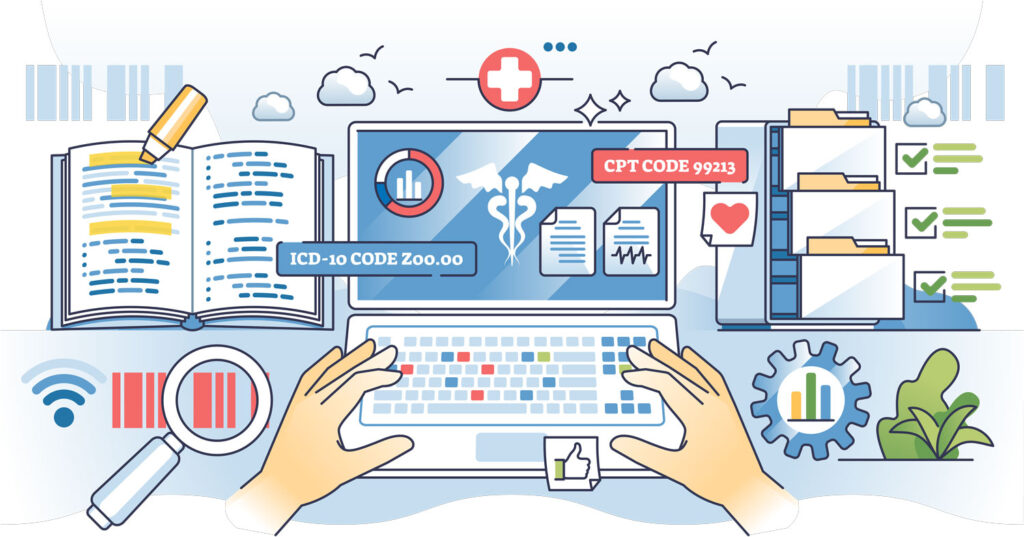
Understanding the specific codes behind each program is where billing clarity actually begins. The CCM CPT codes lineup and their RPM counterparts each carry distinct requirements, time thresholds, and reimbursement values that determine how much revenue your practice captures each month.
According to RPM Logix, recent reimbursement rates for both programs increased roughly 10%, making accurate code selection more financially significant than ever. Missing a single add-on code across a panel of patients adds up quickly. The good news is that these two code sets aren’t mutually exclusive, which raises an important question about how they interact in practice.
The short answer is yes. CMS allows practices to bill RPM and CCM for the same patient within the same calendar month, and this combination is one of the most effective ways to maximize reimbursement for complex chronic care patients. The critical rule, however, is straightforward: time cannot overlap between the two services.
What that means in practice is that every minute logged toward RPM CPT codes 2026 must be documented separately from any time applied to CCM. If a care coordinator spends 10 minutes reviewing device data and 15 minutes on care coordination tasks, those activities must be recorded independently. Bundling or estimating combined time is a compliance risk.
Practices that build clean, parallel documentation workflows for each service can realistically capture both revenue streams without running into audit exposure. According to Prevounce’s recent analysis, combining RPM and CCM for eligible patients significantly increases per-patient monthly revenue compared to either program alone.
The opportunity is significant. The margin for error, though, is narrow, and the most common pitfalls are entirely avoidable with the right documentation habits in place.
Chronic care management billing errors are more common than most practices realize, and the revenue impact adds up fast. The frustrating part is that most of these mistakes are avoidable with the right documentation habits in place.
Overlapping time is the most frequent problem. RPM and CCM services must be tracked separately, and minutes logged toward one program cannot count toward the other. When staff document time without distinguishing which service it applies to, claims become vulnerable to denial or audit.
Missing the 2-day RPM data threshold is another costly gap. CMS requires a minimum of 2 days of device data per month to bill RPM. A patient who stops using their device mid-month can quietly disqualify an otherwise complete billing cycle if no one catches it in time.
On the CCM side, failing to document 20 or more minutes of care coordination per month means leaving roughly $66 or more per patient unreimbursed. That shortfall compounds quickly across a large patient panel.
Two additional errors undercut programs before billing even starts: missing or incomplete patient consent documentation, and simply not enrolling eligible patients at all. According to CCM billing data from Mindbowser, only around 4% of eligible patients are currently enrolled in CCM, which represents an enormous untapped revenue opportunity.
Fixing these errors requires structured oversight, which is exactly what the next section covers.
Strong documentation habits are what separate practices that consistently capture RPM and CCM revenue from those that lose it to avoidable errors. After covering the most common billing mistakes in the previous section, the practical question becomes: what does a reliable compliance workflow actually look like?
Remote patient monitoring billing compliance starts with keeping RPM and CCM time logs completely separate. Because time cannot overlap between the two programs, tracking systems need to make that distinction clear at the point of entry, not during a retroactive audit. Whether a practice uses dedicated software or structured spreadsheets, the method matters less than the consistency.
A few core habits protect both revenue and compliance:
One practical approach is scheduling a brief monthly review before the billing cycle closes. Catching a missing day of device data or an underdocumented CCM session at that stage is far easier than correcting a denied claim.
The compliance side of this equation is manageable. What most practices haven’t fully calculated yet is just how significant the revenue opportunity actually is once these programs are running correctly.

Most revenue loss in chronic care management billing doesn’t come from a lack of eligible patients. It comes from misunderstanding the rules well enough to bill with confidence. That’s a fixable problem.
The math here is straightforward. CCM alone generates approximately $66 or more per patient per month. Add RPM on top, and that number climbs meaningfully. A practice with 100 patients enrolled in both programs can generate substantial monthly recurring revenue without adding appointments or expanding staff capacity.
The core requirements are non-negotiable: CCM demands 20 or more minutes of care coordination monthly, RPM requires 2 days of device data, and time between the two programs cannot overlap. Practices that internalize these rules stop leaving money on the table.
The potential is already within your patient panel. Correct billing execution is the only thing standing between your practice and consistent, compliant revenue growth.
Start by auditing your current enrolled population and identifying gaps in documentation before the next billing cycle closes.

