Story by Connor Danielowski / July 3, 2026
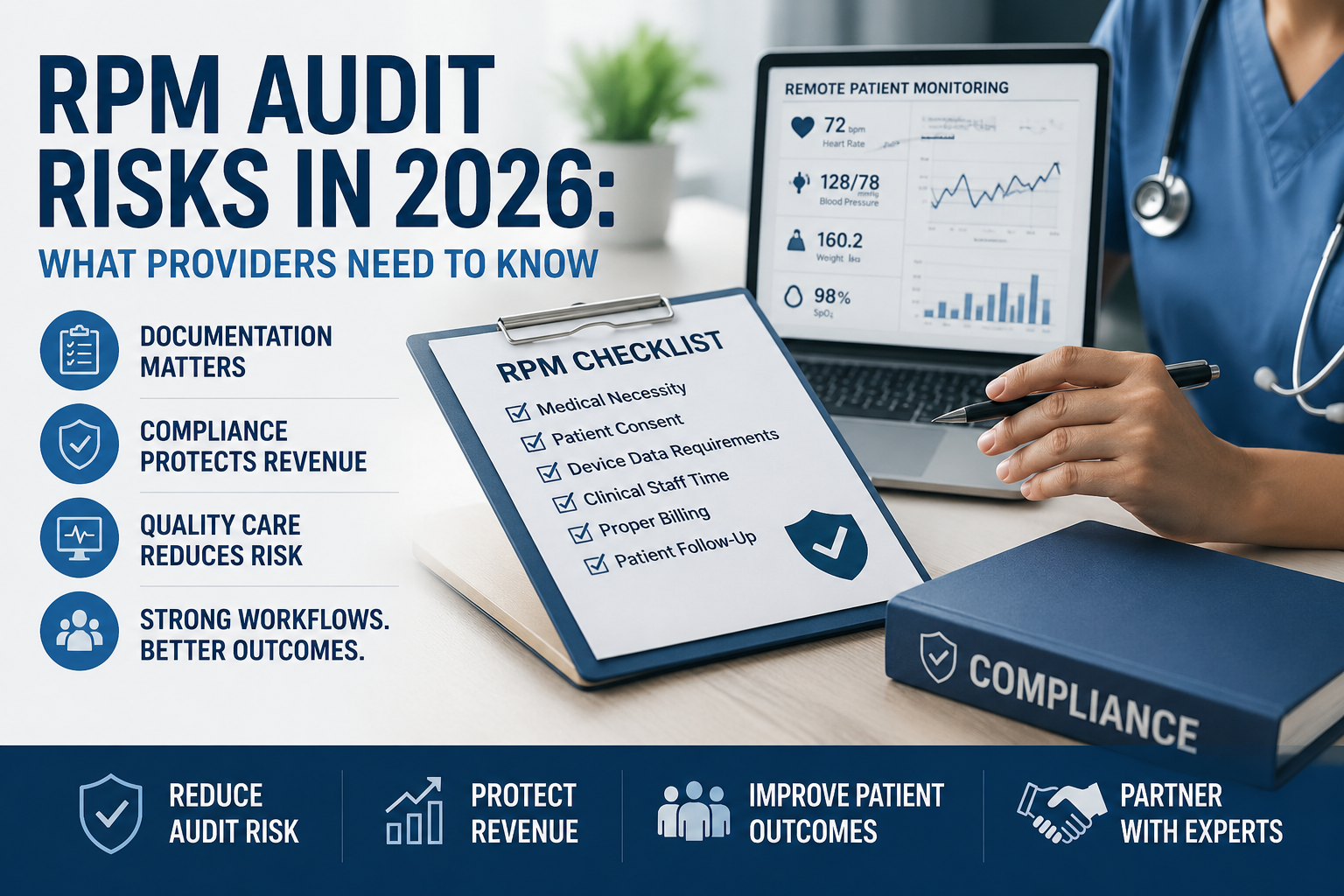
Remote Patient Monitoring (RPM) continues to be one of the fastest-growing Medicare care management services, helping providers improve patient outcomes while creating new opportunities for reimbursement. However, as RPM adoption has increased, so has scrutiny from the Centers for Medicare & Medicaid Services (CMS) and Medicare Administrative Contractors (MACs).
In 2026, providers should expect continued attention on documentation, medical necessity, and compliance. Understanding the most common RPM audit risks can help practices protect their revenue while delivering high-quality patient care.

CMS has invested heavily in expanding remote care programs, including Remote Patient Monitoring, Chronic Care Management (CCM), Principal Care Management (PCM), and Remote Therapeutic Monitoring (RTM). With increased utilization comes increased oversight.
Audits are designed to ensure that providers are billing appropriately, documenting services accurately, and delivering medically necessary care.
Practices that lack proper workflows or documentation may face claim denials, repayment demands, or additional compliance reviews.
One of the most common audit findings is failing to clearly document why a patient qualifies for Remote Patient Monitoring.
Providers should document:
Simply enrolling patients because they have hypertension or diabetes is often not enough. The medical record should demonstrate why ongoing monitoring is expected to improve clinical management.
CMS requires patient consent before initiating RPM services.
Best practices include documenting:
Missing consent documentation is a common compliance issue during audits.

Many RPM billing codes require a minimum amount of physiologic data collected from a qualified medical device.
Providers should ensure:
Incomplete device data can result in denied claims even when clinical care was provided.
Time-based RPM management codes require accurate documentation of clinical staff or provider time.
Documentation should include:
General statements such as “follow-up completed” are rarely sufficient during an audit.
Many practices now provide multiple care management services, including:
While these services can often be billed together when CMS requirements are met, providers must carefully document distinct clinical work and avoid counting the same time toward multiple billing codes.
Understanding how these programs interact is critical for maintaining compliance.
RPM is more than collecting numbers.
If providers receive abnormal blood pressure, blood glucose, pulse oximetry, or weight readings, they should demonstrate appropriate clinical follow-up when necessary.
Documentation may include:
Auditors may question whether providers are actively managing patients or simply collecting data.
A successful RPM program requires more than connected devices. It depends on consistent workflows, accurate documentation, and ongoing patient engagement.
Practices should regularly review:
A proactive approach helps reduce audit risk while improving patient care.

At Chronic Care Staffing, we help healthcare practices operate efficient, compliant Remote Patient Monitoring programs without adding administrative burden to their staff.
Our experienced clinical teams support patient engagement, documentation, care coordination, and monthly workflows that align with current CMS requirements. By partnering with your practice, we help ensure patients receive consistent support while reducing the risk of missed documentation and billing errors.
As CMS continues to expand oversight of remote care programs in 2026, having experienced RPM support can make all the difference.
Remote Patient Monitoring is transforming chronic disease management, but success depends on strong compliance practices.
If your practice is looking to strengthen its RPM program, improve patient engagement, and reduce audit risk, Chronic Care Staffing is here to help. Contact our team today to learn how our Remote Patient Monitoring solutions can support your providers and your patients.

