Story by Connor Danielowski / March 24, 2026

Managing diabetes requires more than occasional office visits. For many practices, limited time and resources make it difficult to provide the consistent follow-up patients need to stay on track.
Chronic Care Staffing (CCS) partnered with healthcare providers across the United States to deliver ongoing care coordination, patient education, and engagement between visits. The result was measurable, large-scale improvement in diabetes outcomes.

Primary care practices face several barriers when managing diabetic populations:
Without consistent engagement, many patients struggle to maintain controlled A1C levels, increasing their risk for serious complications.
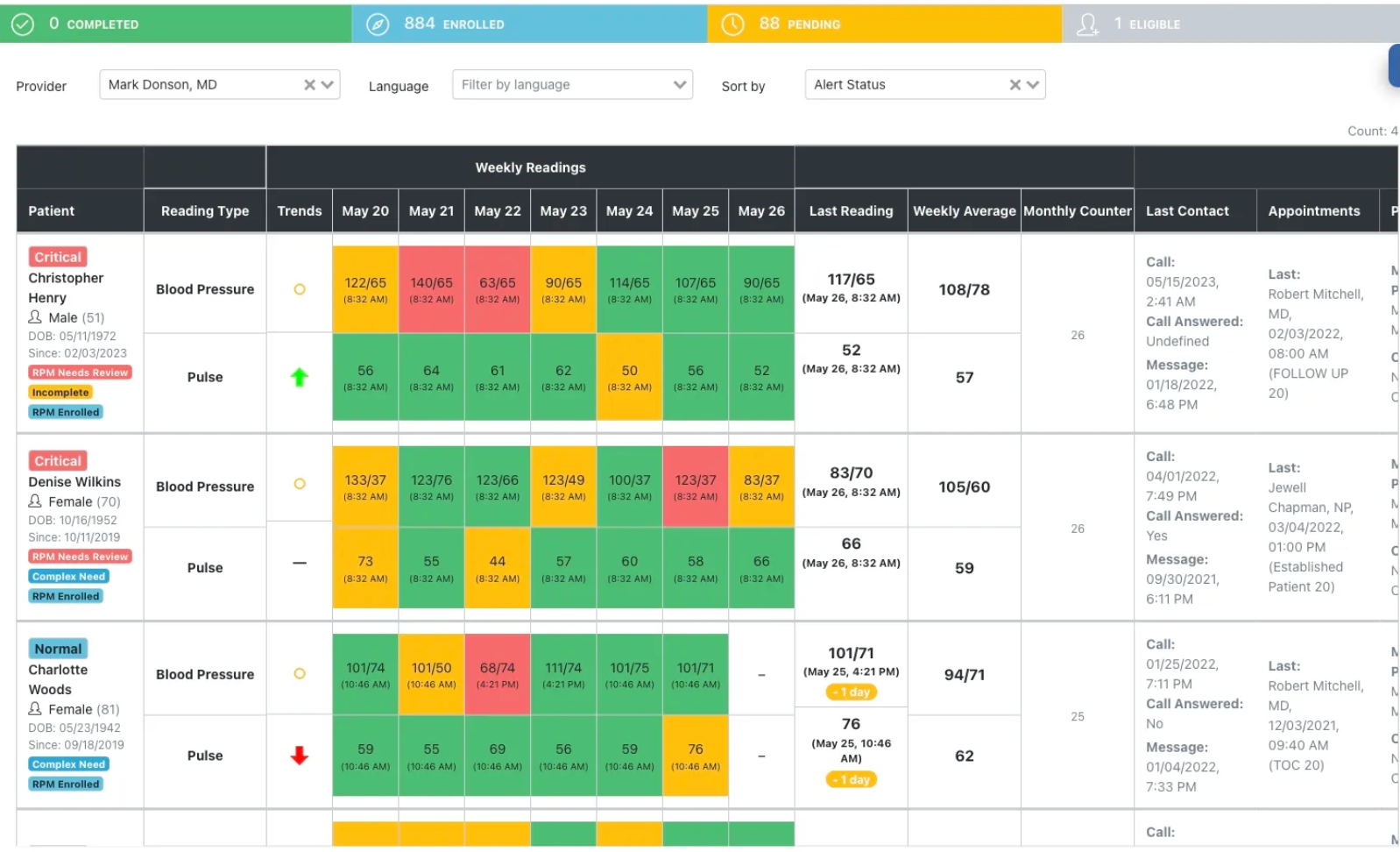
Chronic Care Staffing implemented a fully supported care coordination model designed to extend care beyond the clinic.
CCS Support Model Includes:
This approach ensures patients receive continuous support, not just episodic care.

A key differentiator in CCS’s model is its multidisciplinary care team, which works alongside providers to support patients at every stage.
Care Team Includes:
Each role contributes to a more comprehensive and proactive care experience. Clinical staff manage coordination and outreach, while dietitians and diabetes educators provide specialized guidance that directly impacts blood sugar control.
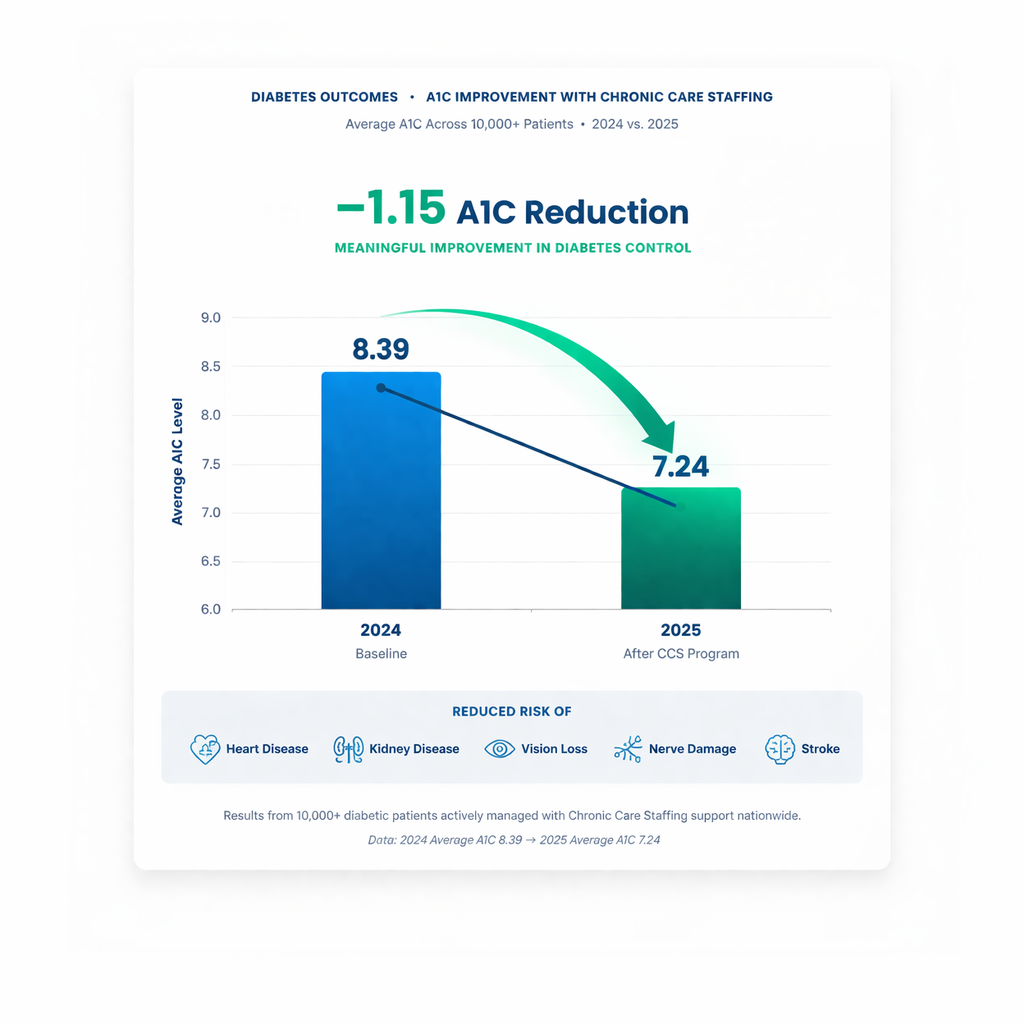
Measurable Improvement in A1C Levels
This level of improvement represents a significant shift in disease control across a large patient population.
Scale of Impact
Thousands of patients improved their ability to manage diabetes, reducing their risk of long-term complications and hospitalizations.
Even modest reductions in A1C can lead to meaningful health benefits. A decrease of over 1 point is associated with lower risk of:
By improving A1C at scale, CCS is helping providers deliver better outcomes while supporting long-term patient health.

Diabetes management happens daily, not just during appointments.
CCS bridges the gap between visits by giving patients consistent access to:
This continuous engagement keeps patients on track and allows providers to intervene earlier when issues arise.

Chronic Care Staffing enables healthcare providers to deliver a higher standard of chronic disease management without increasing internal workload.
By combining a multidisciplinary care team with proactive patient engagement, CCS has helped improve outcomes for more than 10,000 diabetic patients—and continues to scale that impact nationwide.

