Story by Connor Danielowski / July 3, 2026
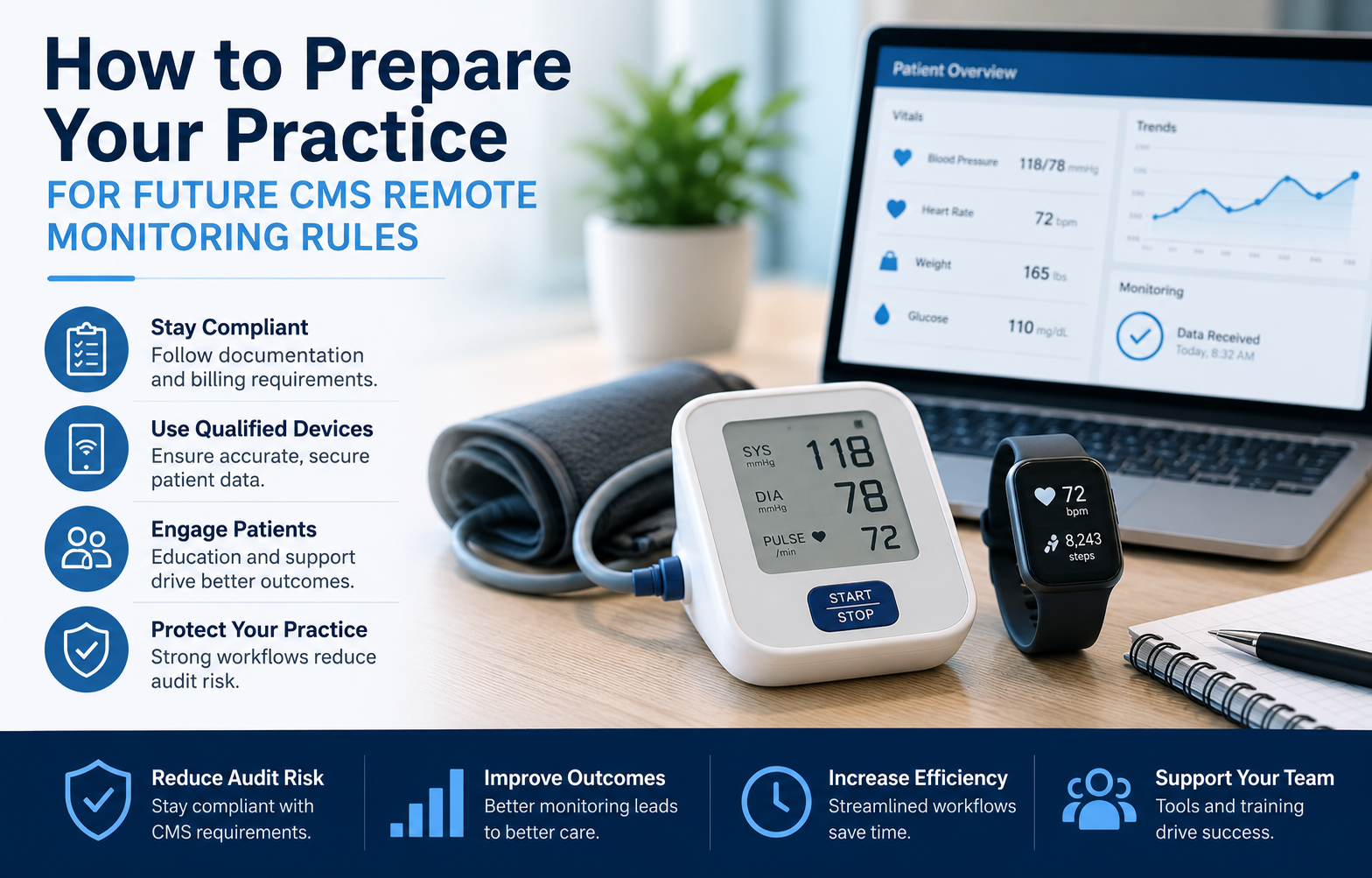
Remote Patient Monitoring (RPM) is now a key part of managing chronic conditions and improving patient outcomes. As CMS continues to update rules around billing, documentation, and compliance, practices should focus on building a strong, compliant RPM program now – rather than waiting for future changes.
As RPM adoption grows, CMS continues refining policies to improve access, ensure proper reimbursement, and maintain program integrity. Practices that stay proactive are better prepared to adapt to new guidance.

Compliance should be part of your daily process, not an afterthought. Key elements include:
Strong documentation protects your practice and supports quality care.
CMS requires RPM to use devices that automatically collect and transmit data. Examples include:
Using approved devices helps ensure compliance and improves data accuracy.
RPM only works when patients stay involved. Make sure patients understand:
Better education leads to stronger participation and outcomes.
CMS regularly updates reimbursement policies. For example, recent changes introduced more flexible billing options with new CPT codes. Reviewing updates each year helps avoid missed revenue opportunities.
Routine internal audits help catch issues early. Review:
Ensure your staff understands RPM processes, including enrollment, documentation, patient communication, and billing. Consistent training reduces errors and improves patient care.

Many practices partner with experienced organizations to manage RPM. A partner can assist with:
This allows providers to focus on clinical care.
Chronic Care Staffing supports practices with compliant, scalable RPM programs. Our team helps with patient engagement, documentation, and care coordination – keeping your program aligned with CMS requirements.
RPM will continue to grow in importance. Practices that invest in strong workflows, documentation, and patient engagement today will be ready for future CMS changes.
If you’re looking to strengthen your RPM program, Chronic Care Staffing can help you build a solution that’s ready for what’s next.

